Themerica

Musings on Thematic Design and the End of Architecture

  • Blog
  • Archive
  • About
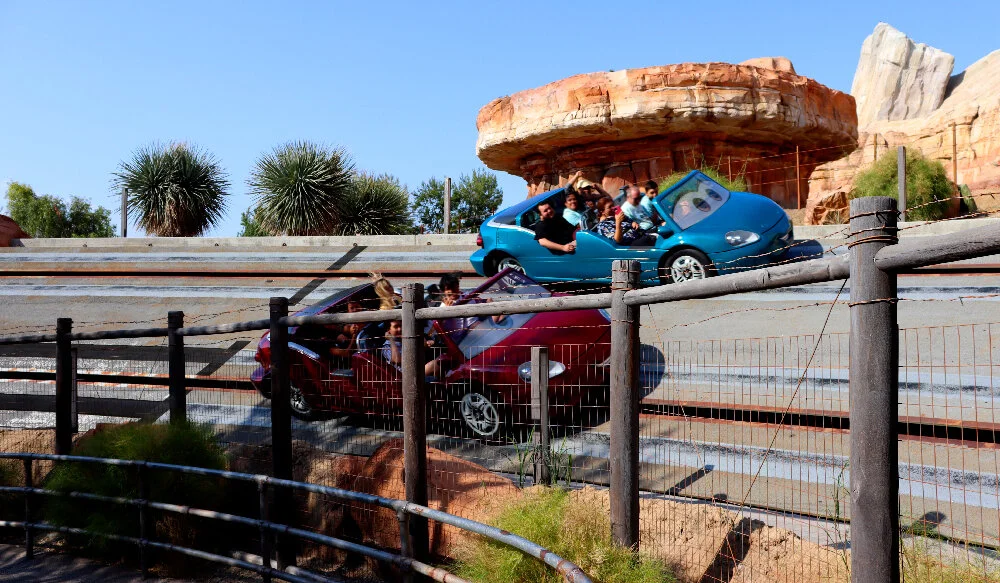
DCA 04.jpg

DCA Then and Now - Part 9: Not So Marvelous.

May 01, 2022 by Dave Gottwald

The latest addition to Disney California Adventure is Avengers Campus which opened on June 4, 2021. This is Disney’s first major placement of Marvel characters and stories in their parks on the West Coast after their 2009 acquisition of the company. And it’s the only place in the United States they can, at least as far as The Avengers are concerned. The Universal Studios Orlando parks have attractions based on The Avengers, X-Men, Spider-Man, and Fantastic Four. Per the new acquisition agreement, a Marvel attraction can’t be built by Disney east of the Mississippi based on those existing themes.

The original Tower of Terror standing tall over a bug's land, 2012.

Avengers Campus replaces a bug’s land which was actually the park’s first major expansion. It opened on October 7, 2002 and was themed to the Disney•Pixar film A Bug's Life (1998). a bug’s land was an area for very small children, and everything was oversized to give the impression that guests had shrunk to the size of insects.

Fan reaction to Avengers Campus was mixed to negative. I think some of the design elements are strong, but my overall impression of the land is that it’s something of a miss. There are a handful of cool ideas here and there, but they just don’t seem to come together right.

Avengers Campus, satellite view. Click for link. Underlay map data: Ⓒ Google.

The land consists of two major attractions, a flagship restaurant, and (frankly) not much else. Apparently the Imagineering vision was initially more expansive but the project was subject to budget cuts in the face of the global coronavirus pandemic.

Subtle Yet Stark

I have not seen any of the Marvel Cinematic Universe films all the way through. I started watching the first Iron Man (2008) with my nephew once, but I lost interest. They’re just not my kind of movies. Yet successful thematic design means providing immersion and interest without presuming guests are familiar with the underlying intellectual property.

According to the Iron Man backstory, Tony Stark’s father Howard Stark founded Stark Industries in 1939. This map of the Avengers Campus is thus appropriately Art Deco, and it introduces the backstory that the area grew out of a complex of Stark defense plants and research labs. Creator Stan Lee has said he based Howard Stark on Howard Hughes.

The first thing I noticed as I walked through Avengers Campus were scores of ghost graphics. Their purpose is to provide a faux historicity to a themed space. Just like with the actual built environment, layers accumulate over time. Ghost graphics, particularly larger ones, can create the impression that a space is older than it is.

There’s a nice short video, part of Disney’s Imagineering in a Box series at Khan Academy, which explains how they are used in thematic design.

This “STRATEGIC SCIENTIFIC RESERVE” eagle graphic is a thus a reference to Stark Industries being a major defense contractor during World War II.

Sometimes the designers provide a literal moment for their backstory, like you’d find on the back of a restaurant menu about its founders.

This sign is a reference to Edwin Jarvis, loyal household butler to the Stark family. He’s sort of the Iron Man equivalent of Alfred Pennyworth in the world of Batman. Again, I had to look this up since I’m not familiar with the Marvel comics or movies. But it’s an Easter Egg that fans will get right away.

Here’s another one I had to look up. “Lucky the Pizza Dog” is Kate Bishop's adopted golden retriever from the Hawkeye (2021) television series.

Spiderman Midway Mania

The major new attraction which debuted with Avengers Campus is WEB SLINGERS: A Spider-Man Adventure. It’s a mixed reality dark ride with 3D augmentation and a shooting gallery aspect, making it an update to the park’s Toy Story Midway Mania! I don’t really care for gamified experiences, so I skipped riding it.

Web Slingers show building, satellite view. Map data: Ⓒ Google.

The footprint of its show building takes up more space than any other structure in the land. It’s stylized as a headquarters for a project called WEB, with which Tony Stark is looking to recruit young engineers to develop innovative technologies.

One thing the designers did rather well in my opinion was to create a credible corporate identity for this “Big Tech” venture. The mark appears to be an abstraction of a spider and is featured on signage throughout.

Part of the backstory of the attraction is that Tony Stark is holding an open house event at WEB, so many of the supporting graphics have a very trade show look and feel.

There are small details all around the show building structure which contribute to the overall immersion. All the typographic is organized and systematic.

As within all Disney theme park lands, even the trash and recycle cans are appropriately branded.

The primary façade is very slick and corporate. All sheen red metal. But as you walk around the corner there is a secondary area which houses the land’s restrooms. It’s more industrial and run-down. I wonder if there is a subtle commentary here, that behind the shiny corporate image of innovation and technological wonder is the the costs—environmental devastation and pollution in the form of pipes, smokestacks, and rusted shed metal.

This “Spider-Bot” is part of the WEB SLINGERS attraction storyline. They are helpers which run amok and begin self-replicating out of control. This one appears to have been shot with one of Spider-Mans webs and is disabled.

I found this split between slick corporate trade show and industrial machinery to be the most interesting design element of the land.

Stranger Things

One of the mistakes the Imagineers made, however, was to try and cram a bunch of different aspects of the Marvel Cinematic Universe into this small themed area. To the right across the way from WEB SLINGERS is the Ancient Sanctum. 

A version of the Disney Magic cruise ship stage show Doctor Strange: Journey into the Mystic Arts is performed here by a costumed cast member portraying the titular character from Doctor Strange (2016). 

According to the official Imagineering backstory,

For as long as anyone can remember, rumors of unexplained events and energies have emanated from a remote location in the hills outside Los Angeles. In the late 1940s, a Stark Industries complex was built on the location. Decades later, Tony Stark invited Doctor Strange to the Avengers Campus to enlighten recruits about the mystic arts. Doctor Strange suspended the area’s cloaking spells and revealed the Ancient Sanctum to the world.

Okay. It’s pretty cool looking, but all it’s used for is a glorified character meet-n-greet. And its inclusion within the campus feels pretty forced.

The theming is pretty cool, but the whole thing comes off as both a missed opportunity and a franchise checkbox. There’s no narrative reason for Doctor Strange to be hanging out at the Avengers Campus. Given a more robust backstory or even an attraction, maybe. This is just a courtyard for character photo ops.

And one novelty photo. Off to one side is an optical illusion rendered on a tiled floor. Custom made for Instagram for sure. It just feels cheap, hokey.

Avengers Assemble (Eventually)

Like a bug’s land before it, Avengers Campus connects to Cars Land via a secondary entrance to the south. I do want to commend the designers here for their sense of transition. There’s a concrete wall that appears to have been broken through.

The wall with fencing is a perfect break from the theme guests are arriving from, forming a natural threshold and gateway to Avengers Campus.

It feels like a contemporary military bunker installation as opposed to the main entrance to the campus which focuses on the complex’s World War II roots.

The sitting vehicle as oversized prop, however, scans as lazy design. It’s a car with a logo and a paint job. This is a Universal Studios move and should be beneath the Imagineers. 

Turning to the right from the Cars Land entrance, we find the Avengers Headquarters.

Is this an attraction? A restaurant? A themed shop?

None of the above. It’s an empty building where “You may encounter brave Super Heroes such as Iron Man, Black Panther, Captain Marvel, Black Widow, Thor, Doctor Strange, Ant-Man, The Wasp, and The Guardians of the Galaxy.”

Back of house for future expansion, satellite view. Map data: Ⓒ Google.

Originally this was to be another banner attraction, an elaborate 4D dark ride or roller coaster to be built on a parcel of land used for cast parking and back of house facilities. It’s been put on hold, perhaps permanently.

The entry doors sit closed shut and unused.

Guardians of the ToT

Walking through Avengers Campus from its primary entrance, the first attraction to be Marvelized at California Adventure is actually the final one you encounter. Guardians of the Galaxy – Mission: Breakout! opened on May 27, 2017 as a re-theming of the park’s Twilight Zone Tower of Terror. It’s based on characters from Guardians of the Galaxy (2014) and Guardians of the Galaxy Vol. 2 (2017).

Tower of Terror as seen from Condor Flats, 2008.

Tower of Terror was added to California Adventure in 2004 as a clone of the original attraction at Disney’s Hollywood Studios. Before the Carthay Circle Restaurant was built, you would see it from all sorts of vantages at the front side of the park.

I didn’t go on Mission Breakout! so I can’t speak to the interiors. The outside has basically been re-skinned in a kind of Art Deco-retro science fiction-steampunk (I’m not sure, as I haven’t seen the Guardians of the Galaxy movies). Some of the details like these new streetlights are well done.

Tiny Bites

Our last stop is at the land’s signature themed eatery, based on Ant-Man (2015) and Ant-Man and the Wasp (2018). Once again, I had to look all this stuff up. Dr. Henry Jonathan "Hank" Pym is a scientist who invents a substance which can change size, and becomes Ant-Man.

Here at Avengers Campus, his Pym Test Kitchen resembles a scientific laboratory. Hank has been using his “Pym particles” to shrink and enlarge various foods.

There are some clever visual effects all around the space, like this factory assembly line of pretzels overhead.

Typical store-bought pretzels enter some kind of Pym particle device with glowing energy rays, and emerge on the other size enlarged (like the ones sold in the restaurant).

There is also some wit here, and a wink and a nod to the prior a bug’s land area. Ordinary condiment bottles are oversized. Have we been shrunk? Or did Dr. Pym make them larger?

Same with the self-serve soft drink counter. All the fluids appear to be supplied by massive cola cans mounted above. The graphics are all accurate and convincing.

The outside bar, Pym Tasting Lab, continues the theme, with a single massive beer can behind the taps.

Even the “drink responsibly” and “please recycle” labeling is replicated along with the bar code SKU.

One final touch. It’s a Disney Imagineering tradition that whenever an attraction or land is replaced or re-themed, some small elements of the prior design are kept as a reminder of the past. Here outside Pym Test Kitchen you can find what appear to be enlarged Christmas-style twinkle lights. They were originally installed in a bug’s land and have been retained.

I really wanted to like Avengers Campus. I like it when the designers succeed. But if I’m being honest the entire area was underwhelming. Nice little bits here and there, but great thematic design produces a gestalt effect—it should feel greater than the sum of its parts. I just don’t see a reason to return. And I don’t think this is due to my lack of familiarity with the Marvel movies and characters. I’ve enjoyed themed spaces and attractions all over the world where I didn’t have a deep love for the source material. The bottom line is good storytelling is good storytelling and superior design is superior design.

This concludes my nine part tour of all the changes made to Disney California Adventure, 2007–2021. Next up is everything new across the way at Disneyland Park and other parts of the resort.

May 01, 2022 /Dave Gottwald
DCA 10.jpg

DCA Then and Now - Part 8: Condor Falls Flat.

February 13, 2022 by Dave Gottwald

The original site plan for California Adventure was a bit strange. It seems like the Imagineers couldn’t quite commit to complete themed areas. As I mentioned in my first DCA Then and Now post, they decided to subdivide.

Original Condor Flats billboard, 2008.

Condor Flats

One of the four larger lands, Golden State, was originally split into six districts called Grizzly Peak Recreation Area, Golden Vine Winery, Bountiful Valley Farm, Pacific Wharf, The Bay Area, and Condor Flats. At one exit of that district there was once a large billboard advertising “Condor Flats Air Tours” with the typical Disney pun instructing guests to “Bear Left.”

Fly ‘n’ Buy Souvenirs, 2008.

According to the Disney Fandom Wiki, the Imagineers developed an elaborate backstory for Condor Flats. In 2001, Paul Pressler (then Chairman of Walt Disney Parks and Resorts), began the dedication of Soarin' Over California with this statement:

This high desert airfield pays tribute to the daredevils and dreamers who lead us from the barnstorming age to the space age. It is home to the preeminent flight adventure Soarin Over California. From early existence man has looked to the sky with dreams of one day experiencing the thrill of flight. It was in California that many of those dreams were first realized.

It’s a neat idea, having a small part of this park themed to a “high desert airfield” setting reminiscent of Edwards Air Force Base (née Muroc Air Force Base) where Chuck Yeager broke the sound barrier in 1947.

The original land’s entrance sign was terrible looking, so I don’t have a picture of it. You can find it here.

Vintage Chevron gas pumps, 2008.

As with all of California Adventure’s original design, however, the execution of Condor Flats left a lot to be desired. This “Fly ‘n’ Buy” retail location, in the guise of a vintage service station, did indeed feature period-appropriate antique props like these Chevron gas pumps. But the art direction was off.

Aircraft hanger restrooms, 2008.

Great aging and washdown on this metal siding, for example. But the typeface is a 1990s revival serif and doesn’t smack of the right era.

Interior of the Fly ‘n’ Buy, 2008.

Inside the place was kind of a yard sale. I’ve discussed “prop cages” before but here the effort is more Six Flags than even Universal. The theme appears to be “junk” without any narrative sense or reality to ground the aesthetic. Who is the proprietor of this fill station? What’s the backstory? This is low rent theming.

Interior of the Fly ‘n’ Buy, 2008.

The tools on the wall tell us this is a service garage. But the license plates and other bric-a-brac makes the place seem more like an antique shop or rural general store. It’s a mess.

Exterior spaces next to the Fly ‘n’ Buy, 2008.

The junkyard vibes continue outside and around the corner. Again, the vision comes off as “do something automotive, and by the way we don’t have much of a budget.” Yet—and I’ve stressed this before—not having a lot of money to spend does not automatically mean that a project has to be awful. Especially if a rundown airstrip and filling station in the middle of the desert is your motif, you don’t need much at all.

Exterior spaces next to the Fly ‘n’ Buy, 2008.

The problem is lack of planning, lack of thought, and lack of story. None of which cost more than the dozen creative meetings the Imagineers were going to have anyway. Like so much of the original California Adventure (I know, I know, again I harp on this), there were some good ideas but in the end they weren’t successfully followed through, and they were executed poorly. So I’m glad that although it took fourteen years, the original Condor Flats finally got a makeover.

Grizzly Peak Airfield

Condor Flats became Grizzly Peak Airfield in 2015. Three years prior, in the midst of the redesign of the Paradise Pier area, the Golden State land and its districts were officially retired. This was the final phase of that dissolution, and I happen to think it’s one of the best redesign moves that Disney has ever made.

Rather than retheme the area like Pixar Pier—or completely tear it down and do something new from scratch as with Buena Vista Street—the Imagineers simply adapted the area’s setting to serve as a natural extension of the land right next door, Grizzly Peak. Themed to the California National Parks Yosemite and Sequoia & Kings Canyon, that area is home to the park’s signature water attraction, Grizzly River Run.

The basic structures were retained but heavily rethought and reskinned. Rather than a bright and tacky desert outpost, instead we find a reasonably authentic wilderness airfield.

The timeline has been subtly adjusted as well. Condor Flats didn’t feel like a trip to the past; more like it was discovered last week having been abandoned for decades. It was old but not present. The original “junkyard” look has been jettisoned, and now guests feel immersed in a National Park setting during a Great American road trip at midcentury. The gas pumps are still antiques, yet shiny. This is a New Past.

This time around, the designers paid clear attention to the typography and signage throughout.

The advertising of Disney’s sponsor Coca-Cola is era-specific.

The road trip narrative is sprinkled throughout, and it’s not overdone in any one place. Gone are the “piles” of past junk. The station wagon looks like it was just parked for a stop and the family is inside asking for directions. There are all kinds of nice period details like the stickers on the car windows and the luggage and cooler in the back.

Small story elements link the Grizzly Peak Airfield to the National Park theme of Grizzly Peak. These “half-day destinations” are all listed by name, but we don’t get any more information about them. This is a trick borrowed from Tolkien’s elaboration descriptions of Middle-earth. Every single geographic feature, no matter how insignificant, no matter if it has any bearing on the characters in the story, is given a place name. As Louis J Prosperi notes in his Imagineering Pyramid, this has the effect of making a fictional world seem much larger and more realistic. It’s the same here.

The interior of the filling station has been revamped as a mercantile for campers, hikers, and river goers. And it works! There’s about the same amount of propping as before, but it’s more orderly and thoughtful. There’s a rhyme and a reason here. And we feel grounded in a real midcentury setting; all the products, packaging, and various ephemera has been carefully selected for verisimilitude.

The land’s public restrooms have been reimagined along the same lines as the filling station. The washed down color palette of barn door red and forest green is consistent, and feels lived in yet not abandoned like the buildings of Conor Flats did.

Again, great attention paid to the typography. This gothic sans rings true for mid century, when the early twentieth century designs of Trade Gothic, Franklin Gothic, and News Gothic were still very popular.

Perhaps my favorite touch are the little bits of National Park signage employed throughout. I’m fascinated with the brand identity of the parks system, so this was a special treat. Curiously, the look of these signs was all due to a single career ranger with no professional design experience.

It’s perhaps a bit design hipster to my eye (and a little too Pacific Northwest) but I like that Disney graphic designers are at least trying. The Grizzly Peak shield appears to be based on the actual arrowhead logo for the US National Parks system, though various parks have employed their own logos over the years.

Here we have the classic Sign Painter script by the infamous House Industries foundry.

Just across the way from the filling station and restrooms now tands a lookout tower built in forced perspective. Before, this metal framework was part of a “cooling station” in the form of a large thrust bell from the Space Shuttle. Coca-Cola was sold there and the rocket engine was a large outdoor mister. It was pretty ugly, so I never snapped a picture of it, but you can see it here in a shot from Daveland.

Nice type here, all set in Interstate which was designed throughout the nineties in the style of United States Federal Highway signage dating back to 1949. Great to see the Imagineers actually routing lettering into wood rather than it being an applied graphic.

I love seeing informational (or “didactic”) text embedded in vernacular graphic design, especially signs like this one. I made a few of them myself when I was a designer at the Oakland Museum of California working on their History Gallery Reinstallation Project (2008–2011). I also designed signs very much like this one for a John Muir exhibit there.

The designers could have used just a piece of metal here, but again it’s routed in wood. Terrific.

Here is one of my favorite graphic pieces at Grizzly Peak Airfield. This map done in the National Parks guide style is reproduced more than once throughout. Like the wilderness activities list at the filling station, this map applies a “Tolkien's Mountains” approach in showing guests a larger, unseen one.

Clever signs like this educate as well as amuse. Disney Legend Marty Sklar called this design technique “An Ounce of Treatment for a Ton of Treat” in his Mickey’s Ten Commandments.

The signature attraction for this land when California Adventure opened was Soarin’ Over California. Although the show building was a nondescript aircraft hanger in its original incarnation, the Imagineers actually came up with an extremely elaborate backstory for its existence:

Condor Flats was once a Mecca for pilots and aeronautical innovators. As the aviation industry moved into more sophisticated jet, rocket and radar research, it moved into more sophisticated headquarters, but the old hanger remained. And then a group of younger aviation enthusiasts found out that the old test site was still around. This group of dedicated aviators developed a sort of "flying theater," a simulator in which everyone can experience the exhilaration of flying.

The new version of the attraction is Soarin' Around the World (which also debuted at Shanghai Disneyland in 2016, where it is called Soarin’ Over the Horizon). The entry sign is now an interpretation of a typical National Park treatment, with California Craftsman trappings that rhyme with the adjacent Grand Californian Hotel and Spa. I’ve noted this natural connection between the NP lodges and the Craftsman style before.

Note the rustic, Craftsman-like fixtures at either side of the entrance walk. The attraction’s show building has now been washed down to match the rest of the redesigned land’s color palette.

The land’s primary fast food outlet used to be called the Taste Pilots’ Grill. Once again the design was so tacky that I didn’t even take any pictures of it. It’s now the Smokejumpers Grill.

Tying in with the wilderness setting of Grizzly Peak, the eatery’s theme now honors the smokejumpers of the US Forest Service. The same attention to detail that we’ve seen throughout the filling station, restrooms, and Soarin’ building is evident here. None of the kitsche of the Taste Pilot’s Grill remains.

Exiting back towards Buena Vista Street, a small “Thanks for Visiting!” sign hangs, routed in wood and painted modestly. You could also miss it. But that’s sort of the point. Where Condor fell flat was in the lack of story structure, incoherent design execution, and a dearth of details and subtlety. The new Grizzly Peak Airfield has it all, and this sign is a great reminder of it. It’s both subtle and detailed.

Good job all around.

Continued in Part 9.

February 13, 2022 /Dave Gottwald
DCA 01.jpg

DCA Then and Now - Part 7: If It Is Broke, Do Fix It!

December 31, 2021 by Dave Gottwald

Although the addition of Buena Vista Street and Cars Land heralded the grand rededication of “an all-new” Disney California Adventure in 2012, the transformation of a large part of the park as a whole had actually begun years prior. This was a long term strategy for the company, built out in phases over the course of a decade. The last of these changes came in the spring of 2019. Because I’m cataloging some ten years worth of changes, this post is considerably longer than usual. I thought about breaking it up, but decided it’s better to have it all in one place.

Paradise Pier, 2008.

The initial opening day concept for Paradise Pier was a seaside boardwalk, common along the California coast during the first half of the twentieth century. Evoking places like Santa Cruz, Santa Monica, Venice Beach, and Mission Beach in San Diego, Paradise Pier ironically recalls the exact sort of places that Walt Disney was reacting to in designing Disneyland. In a literal sense, this themed area is the anti-Disneyland.

Disney California Adventure 2001 souvenir park map poster.

This rendering on the opening day commemorative poster map makes the area look far more rich and compelling than it actually was. In early promotional literature, the land was described like this:

Add a dash of the bygone days of California’s legendary surfside boardwalks to the excitement of a seaside resort and top it off with a heaping helping of Disney magic, and you’ve got Paradise Pier— a land at Disney’s California Adventure park dedicated to the fantastic “Golden Age” of amusement parks, jam-packed with wild attractions, delectable diners and unique shops. It’s “Fun in the Sun for Everyone!”

Too bad that like much of the park, Paradise Pier was designed and constructed on the cheap. It had a tacky quality about it; all concrete, metal, and plastic. If the Imagineers were going to keep this boardwalk area (it would too expensive to tear it out completely) they needed to add some warmth to it. Some paint and plaster. Twinkling popcorn lights. Like what works so well next door at Disneyland, what was called for was the sweet smell of nostalgia.

Toy Story Midway Mania!, 2008.

The Gingerbread Begins

During 2007, Victorian flourishes began to be installed along the boardwalk. This was part of the addition of the Toy Story Midway Mania! attraction which opened on June 17, 2008. The façade and roof for the show building and the attached gift shop recall the late 1800 to early 1900s. Here are the beginnings of a historic boardwalk that is more in line with Main Street U.S.A. over at Disneyland.

The original Cove Bar at Paradise Pier, 2008.

Curiously, there were some part of the land that already had similar trappings. When the original Cove Bar opened in 2001 with the rest of Disney’s California Adventure, it had a lot more personality than the rest of Paradise Pier. Real wood. Popcorn lights. So Toy Story Midway Mania! was a kind of natural extension of that design sensibility, with an expanded budget and greater vision.

Toy Story Midway Mania! standby wait queue, 2008.

This attraction was insanely popular when it opened, but it’s essentially just a virtual shooting gallery combined with the dark ride format. I certainly would never wait 180 minutes from it.

Animatronic Mr. Potato Head at the Toy Story Midway Mania! entrance, 2008.

A classic Mr. Potato Head animatronic stands at the entrance to the queue. The figure is (somewhat) interactive with guests and can verbally respond to what people look like when they pass by.

Midway Mercantile sign, 2008.

There were a handful of really nice flourishes added at this time. This shingle for the attraction’s gift shop, Midway Mercantile, is extremely elaborate (and expensive). The sign is surprising to me, because other parts of this Paradise Pier renovation appear to have subject to budget cuts. This single piece made it through unscathed however. Nice to see.

Themed “Cast Members Only” sign, 2008.

This 2007–2008 renovation introduced what I’ve already commented on over at Buena Vista Street. And that’s the old timey typeface designs of Letterhead Fonts. I don’t recall seeing any of their turn of the century and early twentieth century revival scripts and block lettering until Toy Story Midway Mania! opened. Now their faces are all over the resort, at both California Adventure and Disneyland.

Paradise Pier, 2008.

Here you can see the gingerbread vibe of Toy Story Midway Mania! right smack in the middle of the rest of Paradise Pier, which remained in its original 2001 guise for another decade. Note the Mickey Mouse ears set behind the coaster loop, which many fans disliked.

Vintage postcard, rollercoaster at the Venice Beach pier.

The design of the land was intended to be a homage to California boardwalk amusement zones, many of which featured a classic “woodie” roller coaster as their centerpiece attraction.

California Screamin’ at Paradise Pier, 2008.

The conceit here—which I will admit is kind of unique and a very Disney thing to try—is that the signature coaster of Paradise Pier, California Screamin', is a steel coaster designed to resemble a vintage wooden one. This allows it to have features that typically aren’t part of a woodie, like a vertical loop. Disney promotional materials described the concept as such:

Imagine a roller coaster modeled after the traditional wooden coasters of the 1920’s. Now add a launch that takes you from 0 to 55 miles per hour in under five seconds, a loop-de-loop around a glimmering silhouette of Mickey Mouse’s head, over a mile of track reaching heights of 120 feet, and a 108-foot drop at 50 degrees — and you’ve got California Screamin’, the adrenaline rush of the century!

It’s a type of launched coaster in which linear induction motor (LIM) and linear synchronous motor (LSM) systems propel the coaster train from a dead stop up the lift hill using electromagnets. This to me is a disconnect. I think the steel-as-wood theming would have been more successful with a traditional lift hill. There’s something about that clackity-clackity-clack as you slowly ascend.

Games of the Boardwalk, 2008.

Paradise Pier opened with an assortment of carnival-style games called Games of the Boardwalk: Boardwalk Bowl, Dolphin Derby, San Joaquin Volley, Shore Shot, Angels in the Outfield, New Haul Fishery, and Cowhuenga Pass.

Games of the Boardwalk, 2008..

The original designs of these games and the shops next to them and were garish and completely over the top, just like much of the rest of the original Disney’s California Adventure. A re-themed Games of the Boardwalk opened in April of 2009 featuring Disney/Pixar characters: Goofy About Fishin’, Bullseye Stallion Stampede, Casey at the Bat, and Dumbo Bucket Brigade.

Orange Stinger swing ride, 2008.

Getting into the Swing of Things

DCA opened with a fairly standard, off-the-shelf swing ride called the Orange Stinger. Still offered as the Zierer Wave Swinger, it was customized by the Imagineers and enclosed in a giant peeled orange. And why the “stinger” in the name? Because when you got on board you were supposed to be a bee. The seats were fashioned as bumble bees complete with cute little stingers, and the sound of buzzing bees accompanied your journey. I’m not sure what bees have to do with oranges (although initially the swings featured an orange aroma which was deactivated when it was found to attract actual bees). Disney described the ride like this:

Climb into one of the friendly bumblebee cars and buzz off on your swing-ride journey inside this huge, four-story-high California Orange. It even smells like oranges!

I don’t know why they felt the need to add a swing ride to the park, since nearby Knott’s Berry Farm has had their own Wave Swinger since 1987. You can find them all over the world.

The Orange Stinger reopened on May 28, 2010 as Silly Symphony Swings. I had ridden the prior incarnation of it maybe once. But this redesign is, to my thinking, a total success. First of all, the turn of the century Victorian stylings begun with Toy Story Midway Mania! work very well here. Similar swing rides were popular at amusement parks during that era (the Zierer Wave Swinger is a revival of the format).

Second, there’s a story for the attraction and a connection to Disney IP now. The Silly Symphonies were a series of 75 animated shorts made by Walt Disney Productions between 1929 and 1939, and they demonstrated the potential of synchronized sound in cartoons. Although not part of that series, The Band Concert (1935) provides the theme for the swings. In that short, Mickey Mouse is a symphony bandleader being foiled by Donald Duck (a flute player) when a cyclone hits before a performance of "The William Tell Overture." This is the reason that guests get swept up into the air, and the same music plays for the duration of each swing cycle.

From Golden Dreams to Under the Sea

On June 11, 2010 a new outdoor nighttime show called World of Color debuted. Using sophisticated digital projection systems, synchronized sound, and complex water fountain effects, it’s essentially the next generation of Disneyland’s Fantasmic show.

The show required redevelopment of the edge of the lagoon in the center of Paradise Pier into a viewing area which was called the Paradise Park amphitheater area.

Golden Dreams attraction entrance, 2008.

When DCA opened in 2001, just across from the Paradise Lagoon sat a theater attraction called Golden Dreams. This was a 22 minute, 70mm movie about the various people who have been coming to California since the time of the Spanish.

Vintage postcard, Palace of Fine Arts.

If the Golden Dreams entrance looks familiar, that’s because it’s based on the rotunda at The Palace of Fine Arts in San Francisco. The Beaux-Arts style structure was erected for the 1915 Panama-Pacific International Exposition. It was originally built of plaster and cloth fiber and intended to be temporary. During the 1960s it was rebuilt in concrete and its restoration was completed in the mid-1970s. The rotunda is still there today.

Golden Dreams exterior mural, 2008.

Outside the plain warehouse-like building that housed the theater was a mural providing a preview of the show’s storyline. To the left is Queen Califia for which the state of California is named. During the show, Califia was an animatronic statue who came to life and narrated the proceedings. She had the face and voice of Whoopi Goldberg (who was later named a Disney Legend in 2017).

Golden Dreams was the kind of uplifting, “history light” presentation that Disney developed for The American Adventure at Epcot in the late 1970s (in that show, Mark Twain hangs out with Benjamin Franklin; it’s that’s kind of thing). Challenges and Triumphs etc. The show was a whitewash of edutainment, and it wasn’t very popular either. Most California Adventure guests watched it only once.

Bay Area district of Golden State, 2008.

The part of the park that was home to Golden Dreams was originally known as Bay Area, a sort of sub-area of the larger land Golden State. As such, the storefronts and restrooms just across the way are rendered in the late 1800s Queen Anne style of San Francisco’s famous “painted ladies”, particularly the houses located in the Lower Haight district.

Golden Dreams last ran on Sunday, September 7, 2008. Its large show building was razed the following summer. What replaced it two years later was a themed façade that, just like the Victorian makeover of Paradise Pier, harkens back to the seaside boardwalks of the turn of the century.

Vintage postcard, Santa Cruz Boardwalk.

These resort areas, whether along the California coast, sitting on the Great Lakes, or dotting the Eastern Seaboard from New England to Florida, were lavish constructions that flourished during the first couple decades of the twentieth century. Today, the few boardwalks which still stand are faint shadows of their former glory or, like Cedar Point, have been transformed into contemporary theme parks.

Again, we return to the notion that successful theming—pretty much by definition—is deeply and inexorably tied to nostalgia for some long forgotten (or not quite ever existed) imaginary past. If the Disney Imagineers were not going to abandon the idea of Paradise Pier altogether (which I mentioned above would be too expensive to remove) then dialing into the boardwalk vibes of the early twentieth century makes perfect sense.

Disney fans had been waiting for some kind of dark ride attraction based on The Little Mermaid (1989) for almost 30 years. The loose animated adaptation of Hans Christian Andersen’s 1837 fairy tale was a massive hit. And also a sing-along one (the movie won Academy Awards for Best Original Score and Best Original Song for "Under the Sea"). It basically started the famed Disney Renaissance single-handedly.

The Little Mermaid - Ariel's Undersea Adventure opened on on June 3, 2011. Like the best Disney dark ride attractions, it’s reductive but totally effective. As I describe in my article for The International Journal of the Image, "From Image as Place to Image as Space: Pinocchio, Pirates, and the Spatial Philosophy of the Multiplane Camera," the actual plot of a film is discarded by the designers in favor of a series of evocative moments linked together with music and movements of lyrics and/or dialog. You don’t have to have seen the movie to enjoy the ride (though it certainly helps to have nostalgia for the songs).

The imagineers are known for recycling certain elements from retired attractions. Famously, all the animatronics were salvaged when American Sings (1974–1988) was closed and were reincarnated within Splash Mountain a year later. Here the statue of King Triton on the top of the show building is actually from the water fountains of Triton’s Garden (1996–2008) at the entrance to Tomorrowland in Disneyland.

Also recycled was the rotunda from Golden Dreams.

Retrofitted show building, satellite view. Map data: Ⓒ Google.

Commentators at the time observed that the state of California has a different permitting process for new construction projects versus retrofitting and remodeling projects. Which means that retaining the rotunda and portions of the entrance area means that Disney could file for the project permits in the less expensive category. I suppose this is an incentive to reuse site materials and parts of the original structure.

Thankfully, and in complete contrast with how the original California Adventure park was conceived and executed, Disney did not spare any expense or forego any detail with this new show building.

None of this is required to sustain the theme of the attraction, but it certainly adds to the grandeur of it.

Vintage postcard, Luna Park.

The “Undersea Kingdom” aesthetic is something that was common at the turn of the century amusement areas at Coney Island, New York, especially Luna Park.

Here the design is a bit cleaner, but the reference is clear if you’re familiar with the history.

Again, details, details everywhere. The exterior queue is just as elaborate as the show building.

The imagineers are famous for embedding “Hidden Mickeys” of three circles throughout their environments and attractions. Some are subtle, some are obvious. There is some debate over whether the Mickey Ears design as deliberately incorporated into design details actually counts as a “Hidden” Mickey. Either way, this wrought iron along the queue is a nice touch.

Subtle underwater notes are everywhere. Here at the entrance to the interior queue the window glass frames are irregular and suggest floating seaweed.

This air ventilation grill incorporates a tiny clamshell patten.

Elaborate light fixtures again suggest seaweed.

The support poles of the brass queue rails are capped with sea urchins.

Colorful Spanish tile designs put us “under the sea” as we prepare to board the attraction.

Ariel's Undersea Adventure runs on a more advanced iteration of Disney’s patented Omnimover system. This unique, continuously moving ride system was first developed for Adventure Thru Inner Space (1967–1985) in DIsneyland’s Tomorrowland, and then, beginning in 1969, was most famously used for The Haunted Mansion “Doombuggies” at Disneyland and around the world. Here the vehicles have been appropriately rendered as colorful clamshells.

Across the way, little has changed at DCA’s “Little San Francisco.” The corner location was converted into a Little Mermaid gift shop, and the buildings have been repainted, but that appears to be it.

Pizza Oom Mow Mow exterior, 2008.

A Different Day in Paradise

As I’ve mentioned before, the original 2001 design of California Adventure was—more than anything else—extremely tacky. Many parts of the park lacked effective theming, or when there was a theme, it was executed in the most obnoxious, loud, late-90s way possible. This particular northwest corner of the park, while technically part of Paradise Pier, was designed to evoke the historic Route 66 (as Cars Land would much later, and far more effectively).

Pizza Oom Mow Mow interior, 2008.

Pizza Oom Mow Mow carried a Tropical / Surfing theme, with some Hawaiian and tiki motifs. But again, the emphasis was on loud and tacky. Lots of cheap props, like lifebuoys and road signs. If you’re tacking up “SPEED LIMIT 30 MILES” and “BEACH ST” then let’s face it, the designers are both out of ideas and out of budget. And surfboards. Lots of surfboards, in case you missed the theme. The menus are on surfboards. The tables are surfboards. Surf, Surf, Surf. And pizza.

Surfboard with Imagineer’s signatures, 2008.

On the back wall at the far left was a surfboard hanging all by itself, adorned with signatures of designers who worked on the California Adventure project.

Signatures, including “Burke,” 2008.

Before the park opened, this particular surfboard was on display at the California Adventure Preview Center (1999–2000). Notice the signature above at the upper right, “Burke.” This is not an Imagineer autograph. Where the board was placed on the wall at the Preview Center was not terribly difficult to reach. I was visiting Disneyland one day with a group of high school friends, and we noticed this was a fun opportunity for a prank. One friend provided the makeup pencil, and another supplied the autograph. So there you have it.

Dinosaur Jack, 2008.

This corner of California Adventure was also once home to various tributes to Roadside Americana or what professor types call novelty (memetic) architecture. This was a trend which began early in the twentieth century—wildly exaggerated structures designed to grab the attention of passing motorists. Architecture historian Jim Heimann calls this movement California Crazy. The donut shop shaped like a giant donut. A Dutch bakery as a windmill. Or a dinosaur selling sunglasses. Thus (the extinct) Dinosaur Jack’s Sunglass Shack pictured here speaks exactly for itself.

Corn Dog Castle, 2008.

That same “crazy” California boom was when the billboard industry established itself. Many of these were as zany as the architecture they sat alongside. This tacky Corn Dog Castle along with the Dinosaur Jack and Pizza Oom Mow Mow all closed in the fall of 2010.

Replacing that entire corner of DCA is Paradise Gardens Park, which was technically split off from Paradise Pier. The wild mouse roller coaster just adjacent to the northeast opened in 2001 as Mulholland Madness and was just as tacky as the rest of the park. A re-themed Goofy's Sky School coaster opened on July 1, 2011 along with the gardens park area and two reimagined restaurants.

Paradise Gardens Park also includes Golden Zephyr, Jumpin’ Jellyfish, and the aforementioned Silly Symphony Swings and The Little Mermaid: Ariel’s Undersea Adventure.

Paradise Gardens, satellite view. Map data: Ⓒ Google.

One thing that California Adventure desperately needed for years was areas dedicated to sitting in the shade, and Paradise Gardens Park delivers wonderfully Not only is it lushly landscaped, but the park’s Paradise Garden Bandstand serves as a prime location for live music and the entire area extended the Victorian stylings begun with Toy Story Midway Mania!

Pizza Oom Mow Mow reopened as Boardwalk Pizza & Pasta.

Paradise Garden Grill was formerly Burger Invasion Hosted by McDonald’s, a building so ugly that apparently I didn’t even photograph in 2007 or 2008. Once again the well-designed, period-accurate signage on the exteriors of both restaurants sport typefaces from Letterhead Fonts.

Every little detail in this park is as well considered as in Main Street USA across the way at Disneyland. The architecture is appropriately Victorian gingerbread. Paint treatments are lively in hue yet subdued in value, and all the trims are lined with popcorn lights.

These metal mansard roof treatments are a nice touch.

Thoughtful, historic uses of wrought iron for signage throughout, along with Letterhead Fonts typeface designs. However inside the park’s restrooms there’s a surprise.

The restroom interiors were never remodeled. Here we have tile work that suggests the original Route 66 motif of this “California Crazy” corner of DCA.

Even the floor has a highway on it.

You’d never know it from the elegant signage outside. I don’t know if this was just a budgeting oversight and that Disney will remodel the interiors eventually, or if it’s an intentional nod to the original incarnation of the land. The imagineers are known for recycling elements of extinct attractions or areas, but this is far more blatant.

Paradise Pier exit sign, 2008.

From Paradise to Pixar

The final phase of this area’s transformation began with the opening of Pixar Pier in 2018. Which meant saying goodbye to the original Paradise Pier signage and lettering set in ITC Benguiat designed by master typographer and illustrator Ed Benguiat.

The new signage features the every reliable Imagineering favorite typo foundry, Letterhead Fonts. And there has been a fair amount of structural and color work done to the original buildings. There’s no way around it, the original pier looked cheap. And the historical ties to classic boardwalks might have been intended but was lazily executed.

Vintage postcard, Luna Park.

This time around it’s clear that the designers did their homework, and referenced actual examples like Luna Park at Coney Island. Owning to the Orientalism which was in fashion at the time, many of these boardwalk parks featured minarets and onion domes with festive flags and bunting.

The slow, phased buildout that began back in 2007 really paid off, in that it gave the Imagineers time to make considered choices. There was no rush to the finish line; they’d complete the overhaul section by section, making sure that each new phase was consistent with the prior ones.

But there are still playful elements that link the new pier design to Pixar’s lore. Atop the entrance sign is an animatronic Luxo Jr. which is the mascot of the animation studio. Based on a Luxo ASA Norwegian lamp, Luxo Jr. and Sr. were the stars of Pixar’s first computer animated short Luxo Jr. (1986).

In a stroke of good luck, the old pier and the new have the same initials, meaning that any existing monogram work throughout the land could remain.

Note that the back to back P’s are in the original Benguiat typeface and not a Letterhead Fonts one.

To the left as you enter Pixar Pier is Knick's Knacks. This gift shop is named for Knick, cousin of Frosty the Snowman, from Pixar's fifth short film, Knick Knack (1989). “Nome Sweet Nome, Alaska” is a nice touch.

Across the way to the right is the Lamplight Lounge.

This is another reference to Luxo Jr. and you can see the lamp with the small ball from the animated short in several different guises, here in stained glass.

Above the walkway between these two buildings is a new awning structure. If you look carefully, there are laser cut metal silhouettes of every single character that has ever appeared in a Pixar film.

The ITC Benguiat on the reverse of the entrance sign has also replaced with a face from Letterhead Fonts reminding guests that “Adventure Is Out There!”

Southeast side of Pixar Pier, satellite view. Map data: Ⓒ Google.

The rest of Paradise Pier received a full Pixar makeover too, effectively stripping all of the “California” boardwalk elements away.

The Incredibles (2004) was a huge hit movie for Pixar, so it was a natural IP to bring to DCA. California Screamin' closed on January 8, 2018 and reopened as the Incredicoaster on June 23 as a natural tie-in with the premiere of Incredibles 2 that same month. To me the design of the queue area and coaster station is kind of obnoxious. It looks like a contemporary burger chain.

This is a noted clash with both the rest of the pier buildings at the entrance and with the Victorian gingerbread of Toy Story Midway Mania! right next door. So it’s jarring for me. Despite the terrible paint job, there is one nice touch however. Notice the exaggerated roof.

The Parr residence in Incredibles 2.

The house where the Parrs reside in the sequel film is a spectacular, exaggerated mid-century modernist palace. It looks like a Bond villain’s lair. Just lovely. The Incredicoaster station is based on the sharp, elongated A-frame building. I just wish they had kept the material design of the original rather than repainting everything to look like In-N-Out Burger.

Vintage postcard, The Islander tiki restaurant.

The A-frame was very popular in the 1950s and 1960s, especially in the design of tiki bars and restaurants.

Midway Mania fits even better now that the rest of the pier has been given a victorian touch. The Mickey Mouse ears have also been removed from the coaster loop.

The designers even reevaluated color choices that were made when Mania opened. Compared with the photo at the top of this post (sort of pink and orange on pink and orange) there is now a playful yet high contrast treatment that makes the sign far more readable.

Games of the Boardwalk became Games of Pixar Pier the same day the Incredicoaster opened.

The façades are all perfectly Victorian now, and all the games are themed to Pixar characters. I suppose if we have to have carnival games at a Disney park, this is the best they’re going to get.

It’s an opportunity for smaller supporting characters to have their moment, like Bullseye, Jessica’s horse from Toy Story 2. Curiously, this game remains unchanged from the Games of the Boardwalk 2009 makeover. The other three became La Luna Star Catcher (La Luna, 2011), WALL·E Space Race (WALL·E, 2008), and Heimlich's Candy Corn Toss (A Bug's Life, 1998).

Pixar Promenade is a meet and greet area for Pixar characters. The design is just fantastic. It looks just like the original 1908 architecture I found at Lakeside Park in Denver, Colorado.

The retail locations have all been redesigned and renamed as well. Bing Bong's Sweet Stuff honors Riley Andersen’s imaginary friend—a pink elephant—from Inside Out (2015).

The original Sun Wheel, 2008.

The attraction that’s undergone the most changes over the years has been the park’s Ferris wheel, and with the opening of Pixar Pier it’s hopefully reached its final state. Disney promotional literature had this to say about the original version, the Sun Wheel:

Modeled after Coney Island’s 1927 “Wonder Wheel,” Paradise Pier’s Sun Wheel takes Guests on a Ferris wheel-ride high above Disney’s California Adventure park. You can play it a bit safer by riding one of the cool stationary gondolas; or for a real thrill, climb into one of the purple-and-orange gondolas, which ride on interior rails so they slide inward and outward with the centrifugal force of the wheel’s rotational movement!

That isn’t just PR—the Sun Wheel is actually a pretty close copy of the historic Wonder Wheel at Coney Island. Built in 1920, it was named an Official New York City Landmark in 1989. You can still ride it today.

With the development of the Paradise Park amphitheater area in 2008, the Imagineers decided to redesign what would essentially serve as a massive backdrop for World of Color. The wheel was repainted in Mickey’s classic red, yellow, black, and white colors and his face replaced the sun as the centerpiece. Note that it’s the “original Mickey” design from the 1920s and 1930s—not modern Mickey Mouse—so it’s a better fit both for World of Color and the boardwalk setting. It became Mickey’s Fun Wheel in May of 2009 and water show debuted the following year.

At last, the wheel has became the Pixar Pal-A-Round with the opening of Pixar Pier. Particularly nice is the architectural work at the entrance, which is very Luna Park.

The final attraction to be remodeled for Pixar Pier was Jessie's Critter Carousel, which opened on April 5, 2019. Formerly King Triton’s Carousel of the Sea, it had a theme tied to The Little Mermaid. This was a total disconnect from day one—a seaside amusement park setting with no Disney characters in sight, except for this single carousel attraction. As befitting the original DCA it was also cheap and tacky. Now Jessie the cowgirl, first introduced in 1999’s Toy Story 2, has taken over, unifying the new pier with the Pixar motif.

Paradise Pier parade exit gate, 2008.

Lastly, there’s a large gate next to Boardwalk Pizza & Pasta. This is what it looked like for the park’s first seventeen years or so. It’s good, but not great.

With all due respect and deference to Ed Benguait, I think the new Pixar Pier lettering makes for a superior mark. The incorporation of the ball from the Luxo Jr. short is great.

This was a long post, but a great way to close out the year. I’ll go shorter next time.

Continued in Part 8.

Technical Note on Image Sizes*

* When I began my blogging back in 2008, the internet was slower and smaller. My pictures were tiny back then; 650 pixels wide. When I restarted the blog right here in 2017, I increased this to 1000px wide, with a file size cap of about 1mb. Beginning with this post, I’m increasing this again to 2000px wide for landscape images (retaining 1000px wide for portrait images) with a cap of about 2mb. There might be a slight delay loading these, especially on mobile, but most of us are on faster connections now and often have unlimited data. I think the quality increase is worth it.
December 31, 2021 /Dave Gottwald
DCA 05.jpg

DCA Then and Now - Part 6: Radiating Springs.

November 17, 2021 by Dave Gottwald

Cars Land is a home run example of thematic design by day. I think my prior two posts establish that. Now, it’s true that theme parks in general—and the Disney parks in particular—tend to look great after dark. But I think this built environment manifestation of Radiator Springs takes it to a higher level, because it’s actually an expression of some key moments from the film Cars itself.

Radiator Springs bereft of neon at the start of Cars.

The first time we see Radiator Springs during that first night early on in the film, it looks pretty sad. Most of the lights are dead, and those that remain are flickering eerily. We as the audience get the message immediately; the town has been passed by.

Neon re-lighting sequence in Cars.

On Lightning McQueen’s last night in town—just before the media track him down and he gets carted off to the big race—there’s a charming scene set to "Sh-Boom (Life Could Be a Dream)” by The Chords. All of the neon signage in Radiator Springs has been restored and comes to life. The animation is really well done, and the choreography of the vehicles as they “dance” down the street is especially engaging. Basically, if you talk to anyone who has seen Cars at least once, they’ll probably recall it.

It’s the magic of this celebratory part of the movie that is recreated in Cars Land every night at twilight. The lights don’t come on all at once. They do come on quickly, but there’s a subtle sequence, like someone turning on strings of Christmas lights one by one.

At Disneyland next door there’s a special vibe during twilight, sure. But it’s all incandescent and twinkle lights. The neon on display here has a completely different feeling.

There’s also a different type of nostalgia being expressed. Over on Main Street USA it’s about the quaint charm of early electric lighting (the street is lined with both gas lamps and electric bulbs). That setting (early 1900s) is when electricity was cutting edge technology.

Neon first became popular in the United States during the 1920s and 30s , but in terms of Americana its peak power was during the 1950s and early 60s. Thus—apart from Las Vegas and Reno—many Americans associate neon with the middle of the twentieth century.

Its use in Cars was certainly a deliberate play on nostalgic Baby Boomers’ heartstrings as they watched the film with their children and grandchildren.

But neon is not the only effect used. Like at Disney’s other parks, both spot lighting and atmospheric arrangements are used to heighten the emotional resonance of themed spaces.

Careful attention was paid to make sure that the proprietorships look in person the way they do in the film. Some, like Mater’s tow yard, are never seen in Cars at night, but are imagined in a way that matches those that are.

As LED technology has improved in both luminosity and cost (particularly of high-brightness units), Disney has steadily adopted it throughout their environments. Like in our homes, the energy is cleaner and cheaper. The designers are particularly adept at using fixtures and trimmings that fake us into thinking these are all incandescent bulbs of a far older vintage.

More theatrical stage lighting is still employed liberally for certain effects.

Psychedelic projections at Fillmore’s in Cars.

In this case the designers are trying to approximate what is actually animated in the film.

Motion is replicated too. Commonly, neon signs of the mid-century period had elements which created the illusion of motion or animation as a way to catch eyes from a moving car.

Sarge’s moving neon in Cars.

In the case of the sign on Sarge’s Surplus Hut, it’s a projectile being launched.

On the sign for the Cozy Cone Motel, the “Z’s” rise from a car sleeping soundly.

Caption.

Cozy Cone in Cars.

Just like in the film. Incidentally, it’s this motel sign that says “Mid-Century Americana” to me the most, of all the signs in Cars Land.

I can’t recall if the tail light flowers are seen at night in the film, but they look great in Cars Land. Just the right amount of glow, which appears to have been achieved with LEDs.

Just like all the structures themselves, the Disney Imagineers had the 3D models and digital wireframes from the film from which to base their signage construction drawings on. The movie is the literal blueprint.

FLo’s in Cars at night.

The thing that really impressed me though, was the color of the neon. It’s not just “close enough” it’s a perfect match.

As a designer I’ve had my share of color matching nightmares over the years. From screen to print and back again. Different devices, wildly varying gamuts, incorrect profiles.

The Flo’s Cafe sign lights up in Cars.

The sequential nature of the town’s signage coming alive is highlighted at Flo’s in particular. The camera swoops up as each part comes on, one at a time.

the V8 crown at the top of the sign.

Look carefully at the colors.

It’s spot-on in Cars Land, to the point of being uncanny.

The lighting at the curios shop fits with its roadside kitsch vibe. Twinkle lights with lots of irregular fixtures and sconces. The impression is that all of this accumulated over time.

Radiator Springs Curios alight in Cars.

It was only after watching Cars carefully as I was preparing this post that was like (dang!) they nailed it completely. There are some different proportions and changes to the façade, but as for the lighting effects, it’s 1:1 for what we see in the film.

Kitty-corner across the intersection is another temple of neon at Ramone’s House of Body Art. The scheme is bright green and purple, which reminds me of a sports team or the branding for an energy drink (thus it’s a combination many designers avoid).

Ramone’s at night in Cars.

In the film it’s a bit more blue to my eyes.

The height is impressive in person.

All the smaller script bits in the windows are the same as in the film.

The bluer Ramone’s of Cars.

Yet note the darker, blue-ish interior of the “Body Art” lettering in particular. My guess, based on how they nailed everything else so closely, is that the designers couldn’t replicate the color effect in quite the same way with the physical neon installation as built.

Luigi’s is pretty much the same as in the film.

Luigi’s lit up in Cars.

Even the tower of tires is lit with internal spots (likely LEDs) and the string lights hung above are the same.

I particularly like this smaller logo on the side of the building facing Route 66.

I’ve mentioned in the prior posts how Cars Land expands upon the Radiator Springs we see in the film, extrapolating spaces and so forth. But there’s another kind of expansion going on—temporal. We can spend all the time we want in this version of the town (at least while DCA is open), examining various details in depth.

In Cars, most of these smaller signs are seen lit up very briefly.

The Sparky’s sign is visible for only seconds of screen time.

Smaller neon signs in Cars.

Also, we are only shown the neon signs from particular vantages. Walking around Cars Land at night, you can pick any angle to look at them. The themed space thus expands both time and perspective of its transmediated source.

Disney always has jokes intended for children and more subtle nods that only the grownups are going to catch. Like this bar-as-tune up joint “We’re Open” sign with a small nut for the olive in the martini glass.

It’s not my intention to belabor this point. But there is a confluence of forces at work that make Cars Land at night among the best-realized and affective themed spaces I’ve ever seen. In that it expresses, aesthetically—a truth about its source material.

It’s not just about the design. For one, the neon caries emotional and symbolic weight in the story of the film. We don’t just see the neon in Cars and then see the same thing in Cars Land like any other scenic aspect of the movie.

The conclusion of the neon processional in Cars.

The neon represents the prosperity of Radiator Springs. As in the lights are on and—as the above martini boasts—“We’re Open for Business!” The musical number is nothing short of a processional, a pageant, a parade in which Lightning McQueen demonstrates his true affection for the town and its citizens whom he has befriended. Right before he is whisked away to the big race.

And because the neon coming alive is repeated every single operating day at the same time, twilight, this procession as seen in the film becomes ritualized. It’s like the first lighting of the town Christmas Tree, every single night. Which at DCA is typically 365 days a year.

A few last notes about the nighttime ambiance of Radiator Springs Racers and its queue.

The designers first started doing this kind of stuff in the Frontierland area of Disneyland, and Big Thunder Mountain especially stands out. In the early years the Matterhorn was not lit at night in any special way (this wasn’t added until the attraction was redone in the late 1970s).

In the decades since, the Disney Imagineers have become experts in the art of backlighting with spots; this technique of course comes from filmmaking.

Themed lighting fixtures appropriate to the setting—which tend to be realistic—are augmented with a very otherworldly treatment on all the surrounding rockwork. If you’ve been to any kind of themed space with rockwork on display at night—from Las Vegas to Dubai—you’ve seen this. DIsney invented it.

I have no idea what you’d call this, because I’ve been looking at it since I was a child. Mountains and canyons inside a Disney park are just supposed to look like this at night. In fact, as I got a bit older and spent more time in the great outdoors, camping and going to national parks and the like, my first reaction was that I was stunned how dark everything actually is once the sun goes down. Which is one of the primary appeals of such places. Without light pollution, the landscape of the earth recedes and the stars dominate the night sky. Any trace of civilization evaporates.

Within the theme park, however, the stars of the show are the designers with their neon and LEDs and elaborately glowing rockscapes.

Continued in Part 7.

November 17, 2021 /Dave Gottwald
DCA 139.jpg

DCA Then and Now - Part 5: Go Speed Racers Go!

November 07, 2021 by Dave Gottwald

Tucked away at the far end of Cars Land, off to the right, sits the signature “E-Ticket” attraction for the area, Radiator Springs Racers. It’s a slot car dark ride, using the same technology initially developed for Epcot’s Test Track (1999) and later utilized for Journey to the Center of the Earth (2001) at Tokyo DisneySea.

Gateway to Ornament Valley

Between when Cars Land opened in 2012 until Star Wars Galaxy’s Edge debuted in 2019 this was probably the most popular attraction at the entire Disneyland Resort. Standby wait times are still routinely well over an hour. When I attended a Disneyland Annual Passholder (AP) preview event shortly before the land debuted to the public, the wait was over two hours. But that was a relatively small event. Local press reported wait times of over six hours during the week the Cars Land opened to the public at large.

Radiator Springs Racers, satellite view. Map data: Ⓒ Google.

The way the attraction’s layout is integrated into the land is quite clever. There’s no one single vantage (except this satellite view) from which to see the entire expanse. Any glimpses that guests might get are all carefully managed and controlled.

In the background lies The Cadillac Range mountain formation from Cars (2006). It’s rumored that Pixar/Disney had to receive permission from General Motors to replicate the design of these various vintage Cadillac fins from the 1950s and 1960s. Disney claims it’s more than 280,000 square feet of rockwork (the most at any Disney park), and they posted a video about its construction back in 2012.

Here the design challenge was to link several strong visual elements that are rather disparate in the film itself—the town of Radiator Racer Springs, Radiator Cap Mountain, The Cadillac Range, Carburetor Canyon, Willy's Butte, and even parts of Ornament Valley that are much further afield.

The Cadillac Range in the distance in Cars. All screen caps are from my DVD.

Again, owing to the wit of the Pixar story team, The Cadillac Ranch combines Arizona’s Black Mountains with the famed Cadillac Ranch art installation of Amarillo, Texas. I’m sure you’ve seen pictures of it—a row of ten Cadillacs (from 1949 to 1963) buried in the desert in 1974 with their rear fins sticking out. They get covered in graffiti and then repainted clean every few years. Chip Lord, Doug Michels, and their avant-garde art and design collective Ant Farm were behind the piece, and they were thanked by Pixar in the credits for Cars.

There’s another cool feature from the movie which is cleverly hidden. You have to be well into the queue or be exiting the attraction to catch it. Radiator Cap Mountain.

Radiator Cap Mountain in the foreground of The Cadillac Range in Cars.

In Cars, Radiator Cap Mountain sits directly behind the courthouse / firehouse of Radiator Springs and is much larger than the town below it. Like The Cadillac Range, it’s a nod to a real place, in this case Tucumcari Mountain in New Mexico. But naturally, tweaked quite a bit to resemble a radiator cap.

The mountain in Cars Land is much smaller, and is tightly incorporated into the rockwork of Radiator Springs Racers. There is a large “RS” (for Radiator Springs) on Radiator Cap Mountain in both the film and the themed land, just like how Tucumcari Mountain in New Mexico has a large “T” painted on it. I was surprised to learn that that more than 500 Hillside letters and messages can be found across the United States.

McQueen challenges Doc to a race in Cars.

Stanley’s Oasis

As with all transmediated Disney theme park attractions, there are usually key scenes or sequences in a film which set up the premise for the whole experience. In terms of a high speed, slotcar-type ride, Cars presents an ideal scenario. At about 43 minutes into the story, Doc Hudson (whom McQueen doesn’t know yet is a retired 1951 Fabulous Hudson Hornet) challenges hot shot Lightning McQueen.

So the car racing scenario has a basis in the movie. But that’s all we see of racing, out there in the desert, far outside of town. What the Disney Imagineers do so successfully is they build an entire spatial narrative specific to the attraction they are designing, and then graft it onto to the material world of a film in a seamless way. Just like other aspects of Cars Land, these augmentations (mostly) work.

Tunnels and bridges are very effective ways of providing transitions for theme park guests, as Dr. Benjamin George of Utah State University and I argue in our paper in Landscape Research Record No. 9, the 2020 proceedings for the Council of Educators in Landscape Architecture. In Cinematography in the Landscape: Transitional Zones in Themed Environments, we talk about how well the points of entry into Star Wars: Galaxy’s Edge ease guests into what feels like an entirely different world than the themed lands of the rest of the park (something I’ll be discussing in an upcoming post).

One of the most common complaints about DCA upon its opening was that the park lacked a berm around its perimeter to shield guests from the outside world. Even today, there are plenty of places to see the sprawl of Anaheim just outside. The Cadillac Range effectively blocks all these intrusions when you’re inside Cars Land, keeping guests fully immersed in its visual narrative.

As you make your way further in, you cross under two separate bridges, and each “compress and release” guests in architectural terms, providing a visual and experiential reset. In From Image as Place to Image as Space, I argue that this technique has roots in Disney’s multiplane animation.

Queue of Big Thunder Mountain, Disneyland, 2008.

I would argue that the first Disney queue area to convey visual narrative elements to guests, provide a kind of “origin story” background context for an attraction, and successfully build anticipation for the experience itself was Disneyland’s Big Thunder Mountain (1979)

Queue of Indiana Jones Adventure, Disneyland, 2008.

Since then Disney attraction queues have grown more and more elaborate. The executional apex of the art form, in my opinion, is with Disneyland’s Indiana Jones Adventure (1995). The extremely narrative driven route, which takes you from a jungle into the bowels of a mysterious temple, is over half a mile long.

Radiator Springs Racers queue area, satellite view. Map data: Ⓒ Google.

Still I was greatly impressed by the Radiator Springs Racers queue when I first walked it in 2012, and again in 2021 when I took the time to look closer and photograph it thoroughly.

There’s just enough backstory—suggestions here and there, nods to the films and its characters, as well to a broader Americana—to provide the proper context for the attraction, why it exists, and what its connections are to the lore of Radiator Springs as first seen in Cars.

The strongest story link is to the town’s founder, Stanley. This is only briefly suggested in the film, in mentioning that he is deceased husband of Lizzie who owns the Radiator Springs Curios shop. The backstory was explained as part of the supplemental features of the home video release for Cars on DVD and Blu-Ray disc:

As he was traveling west searching for a place to settle and make his fortune, Stanley stumbled upon a natural spring coming up from the earth. He stopped to fill his radiator and he never left. Soon afterward, Stanley met Lizzie, the love of his life, and together they founded Radiator Springs, which soon became a legendary resting spot for travelers making their way across Route 66.

Here, right in the middle of the queue area, is that very spring.

From there the environment fleshes out Stanley and Lizzie’s early years. Since they are depicted as Model T-style jalopies, this sets the period as the 1920s through perhaps the 1940s. Stanley’s name is used as the lead identifier on various businesses throughout, and the entire town is called Stanley’s Oasis—a precursor to Radiator Springs.

Since the backstory about the spring was never depicted in the film (and who knows if guests have seen that special feature on their blu-ray disc), there is some signage that recounts the basic details, succinctly, like you’d find at a state park.

Radiator Springs Racers queue buildings, satellite view. Map data: Ⓒ Google.

After passing “The Original Radiator Spring” and “Stanley’s Oasis” water tower, the queue winds through three buildings. Presumably, these are the oldest structures in Radiator Springs.

First there’s a large billboard for the town declaring “This is It!” and that you’ve arrived in Radiator Springs where you can “fill up and cool down!” Like much of the graphic design in Cars Land, this is the work of Imagineer Laurel Scribner Abbott.

This first building is The Amazing Oil Bottle House, made of concrete and glass bottles of various colors. A sign inside reads:

This world famous structure is made from genuine oil bottles saved after being consumed by Route 66 travelers visiting Stanley’s Oasis. Stacked upwards from end to end, these bottles would tower past the tallest fin in the Cadillac Mountain Range and reach to almost one hundred and twenty six-thousandths the distance to the moon.

Bottle houses are a tradition that go back to both the ghost town era of California history and the history of local theme parks. When Walter Knott purchased the entire town of Calico in 1951 and added many of its buildings to his Knott’s Berry Farm, he decided to add a bottle house to the collection of structures being restored on-site.

The Bottle House at Knott’s Berry Farm, 2014. Roller Coaster Philosophy/Flickr.

Although these were common enough in the boomtowns of the Old West (bottles being more plentiful at times than more traditional building materials), Calico didn’t have one. Built in 1953–54, It stills stands today in the Ghost Town area at Knott’s.

The next building over is an antique service station / garage, once again owned by Stanley. There are colorful cacti plantings throughout.

As with the rest of the signage in Cars Land, there is great attention to detail.

The silhouette of this vehicle suggests the 1930s.

On front of the garage are a pair of antique gasoline pumps that are decades older than the ones outside Flo’s. It’s a great period touch that strongly establishes the age of the queue area. They also make for interesting things to look at while standing in line in the summer heat.

The fictional brand—Butte Gas—has a logo featuring Willy’s Butte (more on that in minute).

Still, Stanley’s name looms around every corner.

These are particularly clever. They are misters, employed more frequently out at Walt Disney World in the Florida humidity (in fact, I can’t recall any of them installed inside Disneyland at all). As the Imagineers are wont to do, if they need to include a practical feature in their design for guest comfort or accessibility reasons, they insist that it all fit with the visual narrative of the area.

They are off-the-shelf industrial models from a company called Fogco in Arizona, but they’ve been distressed and painted to fit the period look of the rest of the queue, and advertise “Stanley's Cap ‘n' Tap.”

Title card for “Time Travel Mater” (2012). All screen caps are from my DVD.

This business—or any of Stanley’s other ventures—is not mentioned in Cars, but rather debuted on an episode of the series Mater's Tall Tales (2008–2012) called “Time Travel Mater”. It aired just days before Cars Land opened to the public.

Stanley and a time travelling Mater meet back in 1909.

According to that episode (which retcons some of the history of the founding of Radiator Springs; Mater is a time traveller who convinces Stanley to stay in the area, ensuring the town’s future), Stanley's Cap ’n' Tap began in 1909 when Stanley was traveling radiator cap salesman.

Radiator Springs Racers show building, satellite view. Map data: Ⓒ Google.

The attraction has a massive show building, completely concealed behind the tall façade of the Cadillac Range. I’m pleased to see Disney embracing solar in their operations; the show buildings for older attractions at the resort like the Indiana Jones Adventure and Pirates of the Caribbean still lack panels.

Tail Light Caverns & Time to Race

As you approach the load area, the entire narrative of the queue shifts. It’s not about Stanley and his oasis anymore. It’s about an interesting series of caves which, again, are not seen in the film.

The lighting treatment remind me very much of the winding temple queue for the Indiana Jones Adventure as well as those scattered all over the Asia and Africa portions of Disney’s Animal Kingdom.

Guests board their ride vehicles inside what appears to be a filling station built inside Tail Light Caverns, home to the famous “Stalac-Lights.” It’s presented as a National Park, much like Carlsbad Caverns in New Mexico.

Mater arrives in the Tail Light Caverns in 1909.

This location is once again from Mater’s Tall Tales. Disney was clever in setting up the backstory for basically the entire Radiator Springs Racers area with that single episode, “Time Travel Mater.” And of course, it was sheer media synergy savvy to air it a week before the land opened.

There are important references to Cars as well. Right after your board your racer and depart, the vehicle—which seats six passengers and has a generic resemblance to other cars seen in the film—approaches a familiar waterfall and bridge rendered in miniature and forced perspective so they seem rather far away.

Lightning and Sally’s day trip.

Here is where Lighting McQueen and Sally take a drive out of town to explore the rest of Ornament Valley. Just as in the film, riders on Radiator Springs Racers are treated to perhaps composer Randy Newman’s most famous bit of music from the film, “McQueen and Sally.” The visuals are paced carefully so that the cue that accompanies the majestic reveal of the waterfall is exactly the same.

Then you quickly disappear into a dark tunnel and begin the inside, show building portion of the attraction.

Here’s one of the many 4K POV videos of Radiator Springs Racers available, courtesy of the folks at ThemeParkHD. Skip to about 2:30 for the actual ride footage to start. The entire experience from load to unload lasts about four and half minutes.

After meeting the citizens of Radiator Springs (at night) as well as getting suped up for the big race with either a tire change at Luigi’s or a new paint job at Ramone’s, two cars pause side by side. Doc Hudson waves us on, and it’s race time. The route is entirely outdoors.

Doc and McQueen race around Willy Butte in Cars.

The rest of the attraction recalls the scene in which Doc challenges McQueen, saying that if he wins he doesn’t have to complete his community service sentence (repaving Route 66 through town) and is free to leave. The course they race is a banked curve around Willy's Butte, in a part of Ornament Valley.

The design of Willy's Butte is based on Mexican Hat Rock in Utah, but also resembles a classic Pontiac hood ornament. As it’s the centerpiece of the canyon racing scene in the film, it’s also the visual anchor for the entire Radiator Springs Racers portion of Cars Land. We race the same banked curve that Doc and McQueen did (and hopefully don’t end up at the bottom of a ditch like an overconfident Lightning).

The racer vehicles turn and dart around the course so quickly (at times over 40 miles per hour in short bursts) that it’s hard to take in the beauty of the rockwork of the Cadillac Range. But the spires are always in the background and give this entire outdoor portion of the attraction a strong sense of place.

It’s when you’re being hurled through this landscape that you get a sense of the geographical mélange that has been meticulously assembled. Recognizable parts of California, Nevada, Arizona, Utah, and even New Mexico are slammed together. The cacti foregrounded here belong in the southern parts of Arizona, but the eroded canyon features in the background are from farther north.

Conversely, these peaks look closer to what I’ve seen in the National Parks of Utah than in Arizona.

The finale of this wild ride is two part. You race into a short tunnel for a flash photo opportunity, then accelerate one last time and head for the checkered finish line banner.

Which car wins each time is established randomly by computer. This banked curve finale is essentially identical to Epcot’s Test Track, though that attraction is arguably more thrilling in that the course is both longer and you go a lot faster (~65mph).

Once the vehicles slow you return to the Tail Light Caverns and realize that it’s not just a filling station—there’s an entire “clean & quiet” motor court here with “free cavern tours” and “good rates.” Upon exiting there are tons of rich details to check out, all the way on the return walk back to Radiator Springs.

Disney does this all the time. Because guests are typically so excited to board (especially first time riders) they often miss some of the more subtle world building going on in the themed space of a ride’s load / unload area. So the Imagineers save some of this visual storytelling for the exit out.

This also serves to “hold” guests in the narrative space as they leave, bringing them down from the high of what they experienced, and prepares them for the next thing they’re off to go do—whether it’s eat, shop, leave Cars Land for another themed area, or just ride Racers again.

Here the same trope from the Cozy Cone Motel is repeated. The “suites” of the motor inn are actually garages. This one is named after Lizzie, Stanley’s widow, who we meet in Cars.

Dinoco is yet another petroleum brand found in the Cars universe.

The name is both a verbal gag—a play on Conoco—and a visual gag referencing the famous Sinclair Oil brand which uses a Brontosaurus as its corporate logo. “Dinoco” substitutes a Stegosaurus (and, unfortunately, Copperplate Gothic).

Often guests must exit an attraction by going up and over the track of the ride vehicles. The Imagineers are always looking for interesting ways to do this. Here we walk the service corridors of the motor court.

There are fun bits of signage along the walls.

One of the few times you’ll ever see the designers break the fourth wall of their themed environments is with required notices like exit signs or employee only areas (“cast members” in Disney company parlance). However, these never stand out because they’re designed accordingly, all the way down to aging and rust.

The Imagineers are carefully to give you entirely new vistas on your walk out of an attraction than you saw standing in the queue on the way in.

It was here along the final banked curve where the winner is declared at the checkered banner that I found something very clever. Perhaps my favorite design element of the entire attraction.

Looking closely at the barbed wire along these fences, I noticed that the braided bailing wire strands themselves are real metal. But the “barbs” are fake, harmless rubber. I can’t imagine the extra effort and expense it took to fabricate thousands of these tiny rubber barbs and then glue them onto these strands of metal wire. Then paint them with artificial rust.

They look entirely convincing at a distant glance, and on close inspection. It’s remarkable. All to maintain—safely—the realism of some fencing.

Get Your Kicks Back On Route 66

The entrance into and exit from Cars Land on the east side of Disney California Adventure is nothing special. But on the west side it’s quite possibly the most charming part of the entire area. For one thing, guests have a panoramic view of the outdoor portion of Racers. But it took a narrative and spatial cheat to achieve this.

Route 66 intersecting with Cross Street.

In Cars, Route 66 intersects with Cross Street at Flo’s. Ramone’s, Luigi’s, and Lizzie’s businesses occupy the other three corners. But as you can see from the above vantage from the film’s finale, Radiator Springs is just a flat grid. Cross Street dead ends with another road. Route 66 bends right when it hits the courthouse / fire station at the end of town and then continues on.

What the Imagineers have done is create the look and feel of being back on Route 66—just like the drive that Lightning McQueen and Sally take out of town—yet the road leads off the intersection at Cross Street. The turn the highway takes in the movie instead leads to the queue entrance of Racers, so they had to find another way to make it out to the west side of DCA and still have guests recall vistas from Cars.

There’s a really fun gag along this stretch of highway. It’s a series of signs advertising Rust-eze (owned by Dinoco), a medicated bumper ointment for cars with rusty bumpers. This is a play on the very famous mid-century Burma-Shave campaign which was deployed all over the United States, including on Route 66, in which a series of signs along the road featured humorous verses. They were like advertising limericks, the poetic equivalent of a television jingle, and are very fondly remembered by Baby Boomers.

They were also double-sided, with different rhymes depending on which direction you were driving. Here are the Rust-eze signs, first walking east into Cars Land…

DCA 178.jpg

And then exiting to the west.

The first series references Mater, and the second warns you might get pulled over by Sheriff.

The road stretches along this panoramic view of Racers and the Cadillac Range, and then begins to curve to the right. Then you pass through an arch much like you’d find at a certain National Park in Utah.

Looking in from the other direction, you can clearly see how masterful the designers are at using tunnels to transition between different themed areas. It’s a threshold, a gateway. A magic portal. At first there is the Cadillac Range, at what appears to be miles distance, bright and out of focus. It’s the primary “wienie” drawing you closer and into the land.

As you get a bit closer and are about to walk under the arch, suddenly Willy’s Butte comes into view, having at first been obscured from your field of vision. It’s a fantastic trick. You’re drawn to one wienie, quite a ways away, and then abruptly you are given another one much closer, much larger. It’s thematic sleight of hand, and it works beautifully.

Next, we’ll return to Cars Land and see how different Radiator Springs is at night.

Continued in Part 6.

November 07, 2021 /Dave Gottwald
  • Newer
  • Older

All original content on this site © 2007—2026 Dave Gottwald.
My photography is licensed under Creative Commons NonCommercial 4.0.
You are free to use my images for non-commercial purposes only.